ADOBE COMMERCE + MAILFINO
Use Adobe Commerce data for targeted newsletters
Use customers, completed purchases and products from Adobe Commerce in a focused newsletter workspace. mailfino complements your commerce stack — in the cloud, self-hosted or with Enterprise.
- Import customers and completed purchases
- Use purchase segments and product cards
- Read-only REST API access

Data flow
Add a dedicated newsletter workspace to Adobe Commerce
Adobe Commerce already includes newsletter templates, subscriber management, double opt-in and a sending queue. Adobe Journey Optimizer, by contrast, addresses comprehensive, cross-channel journeys in real time. mailfino sits between them: a focused newsletter workspace for visual design, purchase-based audiences, sending and reporting with a choice of deployment models.
Import when needed: Customers and completed orders are imported through separate import profiles. There is no continuous real-time synchronization and no data is written back to Adobe Commerce.
Adobe Commerce
Customers, orders, products and categories
→
mailfino
List import, purchase data and product search
→
Newsletters
Purchase segment and linked product card
Customers, purchases and products
Turn store data into newsletter audiences
CUSTOMERS
Import shop customers as recipients
Customers are imported into a selected mailfino list. Repeat imports update the same contact using the stable Adobe Commerce customer ID.
PURCHASE DATA
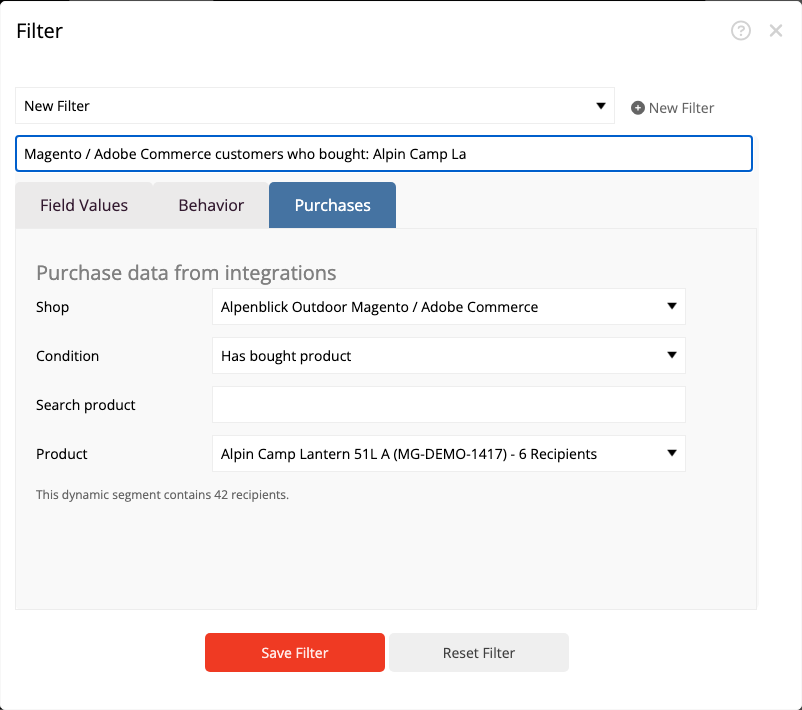
Use completed orders to select buyers
Order items and product information are stored in the background for filtering, segmentation and product selection.
SEGMENTS
Select by product and category
Dynamic filters can respond to purchases, individual products and categories. Adobe Commerce categories are resolved from the product data.
PRODUCT CARDS
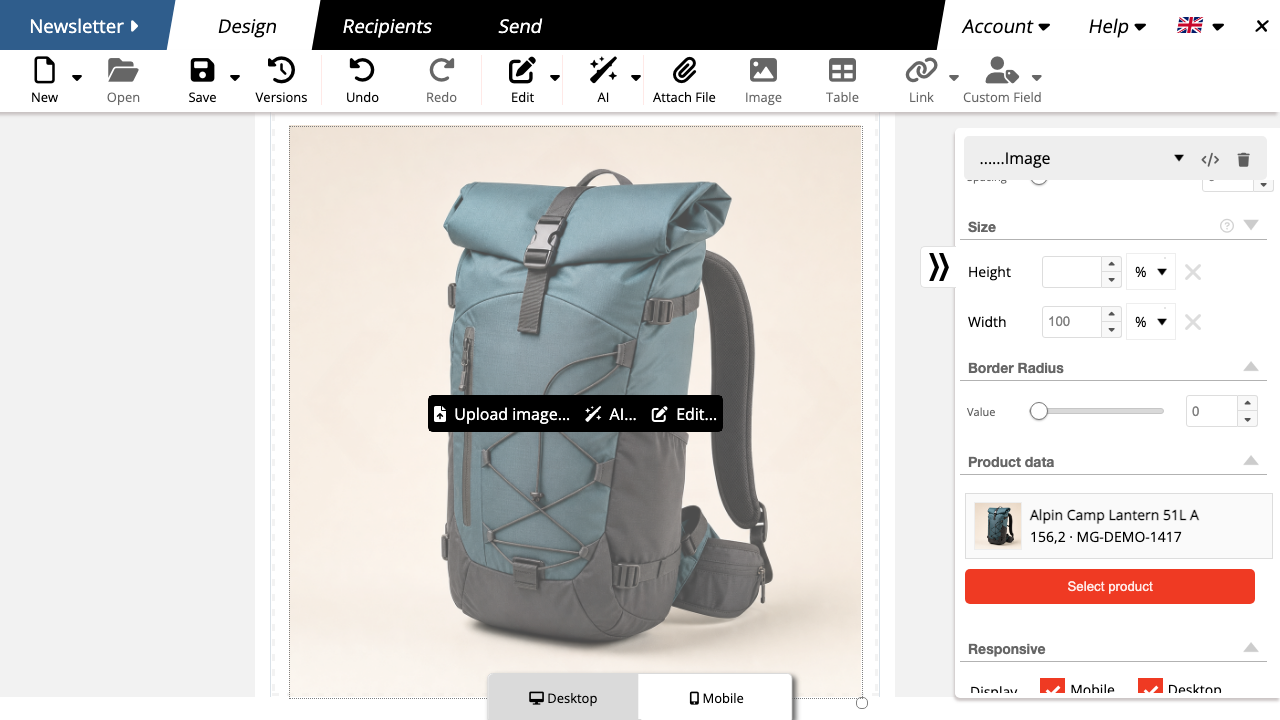
Add commerce products
Product name, image, description, price and link are added to the newsletter from the stored product data.
SEARCH
Find the right products
Find matching products with search, without scrolling through the entire catalog.
REFRESH DATA
Refresh your purchase data
Reimporting orders replaces the purchase data stored for this connection with the current data.
Typical workflows
Build newsletters around what customers buy
Segment buyers by category
Import orders and save a dynamic filter for contacts who bought a product from a maintained Adobe Commerce category.
Add shop products to your newsletter
Search for the product you want in the editor, insert the product card and check the text, price, image and destination URL.
Prepare campaigns with current data
Run the import profiles again before calculating your audience. Newsletter cards that have already been saved are not changed automatically.
Requirements and setup
Connect with read-only access
All you need for the connection is the shop URL and an activated Integration Access Token with the appropriate read permissions.
- Create a dedicated integration in Adobe Commerce under System › Extensions › Integrations.
- For production use, restrict read permissions to customers, orders, products and categories.
- Activate the integration, transfer the access token securely and enter it in mailfino.
- Test the connection, then configure import profiles for customers and orders.
Consent, data protection and limitations
A purchase remains separate from newsletter permission
The current integration does not evaluate a dedicated Adobe Commerce consent field. Permission to send in mailfino determines whether a contact may be contacted.
- The documented workflows require no write permissions, administrator credentials or database access.
- The order import does not create contacts from all buyers.
- Purchase segments count only existing mailfino contacts with the same email address.
- Products without a purchase reference cannot currently be used as a basis for segments.
- Product changes do not automatically update a saved product card.
- Product links are generated from the stored
url_key; custom storefront routes must be checked in the preview.
Ready for newsletters with Adobe Commerce?
FAQ
Questions about the Adobe Commerce integration
Does mailfino replace Adobe Campaign or Adobe Journey Optimizer?
No. mailfino is a focused newsletter and marketing automation solution with its own editor, sending and reporting. The integration uses commerce data but does not recreate a complete Adobe Experience Cloud journey.
Which Adobe Commerce variants are supported?
Adobe Commerce installations with the documented REST API and Integration Access Token are supported, including self-managed installations and Adobe Commerce on Cloud Infrastructure. Adobe Commerce as a Cloud Service and Adobe Commerce Optimizer use different architectures and are not covered by this integration.
Is Adobe Commerce data synchronized in real time?
No. Customers and orders are imported in a controlled way through separate import profiles. Reimporting customers updates contacts using the Adobe Commerce customer ID; reimporting orders replaces the purchase data stored for the connection.
Which credentials does mailfino need?
The shop URL and an activated Integration Access Token are required. An administrator login and database access are not required.
Which permissions should the token have?
Read permissions for customers, orders, products and categories are sufficient for production use.
Can Adobe Commerce categories be used for audiences?
Yes. mailfino resolves categories from the stored product data and can use them in purchase conditions.
Does mailfino import shop consent?
No. The current version does not evaluate a dedicated shop consent field. Permission to send must be managed in mailfino.
What should I consider with custom Adobe Commerce URLs?
Product links are based on the stored url_key. Check the newsletter preview if you use special storefront routes or URL rules.
